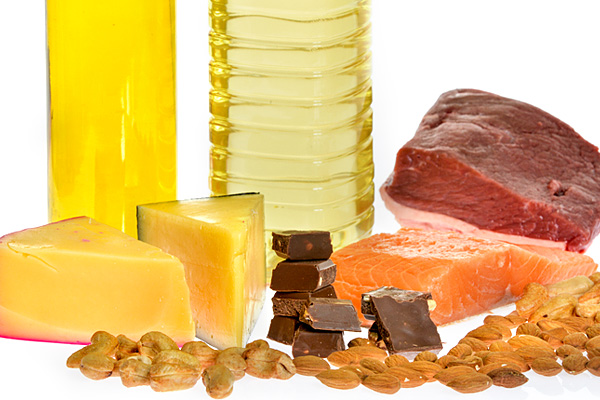
 Fats are a large group of organic compounds found in plant and animal tissues. Fat intake increases as the wealth of society increases, from which also shows a number of undesirable health consequences.
Fats are divided into simple and complex. The first group contains the right fats constituting glycerol esters and fatty acids (so -called. triglycerides). For complex fats (we are interested) First of all, phospholipids belong, otherwise known as phosphatides. These are glycerol esters with fatty acids and phosphoric acid as well as with other chemical groups attached, which differentiate them to lecithins, cheap, spingomine and others.
The second group of complex fats are glycolipids, i.e. cerebrosides, which includes fatty acids, Sugs and sphinxes, which is an aminoalkohol. Cerebrosides are a characteristic component of the brain tissue (Hence their name comes from).
For fats, Despite the different structure and chemical properties, We also traditionally include sterols (They are secondary alcohols). They occur almost always together with dining fats. Sterols derivatives are: bile acids, vitamins D, adrenal cortex hormones and sex hormones.
It also belongs to the sterola, currently focusing the greatest attention, cholesterol. There is a rich literature on his role in the formation of atherosclerotic changes. The content of this compound should not exceed 250-350 mg per day in the diet. Diet in the participation of meat and animal products is almost always 2-3 times richer in cholesterol, And because cholesterol also arises in the human body as a product of internal synthesis, This is easily explained by the fact, that in vegetarians atherosclerotic changes occur much less often or not at all. The high level of cholesterol in blood plasma is considered the most serious risk factor for coronary artery disease.
Edible fats are triglycerides with an admixture of other fat bodies, steroli itp.